Wednesday, May 4, 2011

GOP Launches Push to Expand Offshore Drilling

http://www.treehugger.com/files/2011/05/gop-launches-push-expand-drilling.php?campaign=top_news

By Brian Merchant, TreeHugger.com, 5/03/11


Summary:

Just one year after the tragic BP Oil Spill, GOP is pushing to expand offshore drilling for oil. The oil spill one year ago in the Gulf of Mexico, spilled 210,000,000 gallons of oil in to the water, killing tons of marine life and damaging the local fishing-based economies of Louisiana and Florida. The GOP has proposed 3 bills, presenting three plans and conditions for where they wish to begin their drilling. These bills would allow drilling in a wide range of coastal waters through Alaska, the East Coast from Maine through North Carolina, and also in Southern California. This bill also states that if it takes more than thirty days for the government to review drilling permit applications or they will automatically be granted permission.

Reflection:

I think that it is ridiculous for the GOP to be promoting drilling for oil. It has only been one year since such a tragedy of an oil spill, and it seems like they haven’t learned anything. Obviously, if that happened once, it can happen again. In class, I learned that drilling for oil is not only bad for the marine life surrounding it, but burning it is horrible for the environment, because it omits carbon and contributes to green house gases. I also learned that there are many sources of alternative energy, and we should be cutting down on the use of fossil fuels. Instead of spending valuable time and money on drilling for more fossil fuels, companies should be concentrating on improving alternative and renewable energy resources that are more cost effective and better for the environment.

Questions:

1) Do you support fossil fuels?
2) Do you agree with the GOP, in that it is necessary to drill for more oil?
3) What are ways, other than fossil fuels, to provide energy?

Monday, May 2, 2011

Los Angeles to Stop Using Coal by 2020


http://www.alternative-energy-news.info/los-angeles-to-stop-using-coal-by-2020/

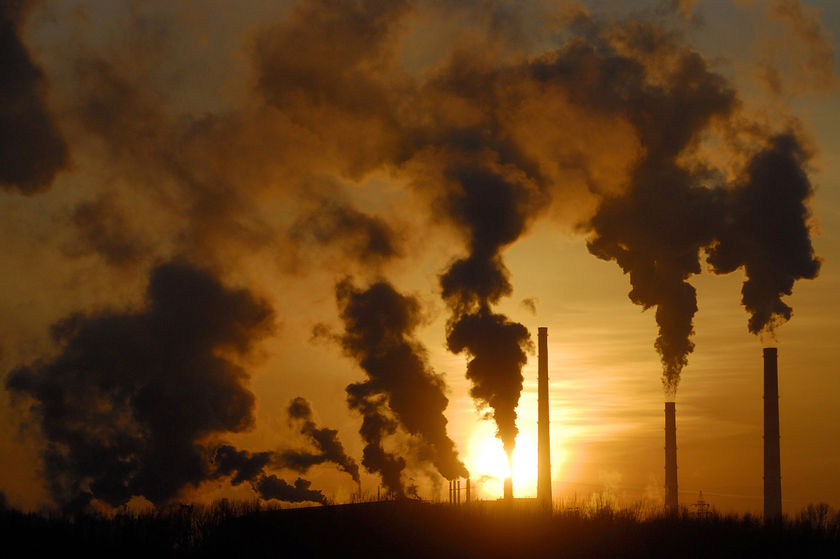
Summary: The major of Los Angeles, Antonio Villaraigosa, said that Los Angeles in the year 2020, will completely eliminate the usage of coal and turn to alternative energy resources. He said that the wind and the sun and other resources will be used for energy instead. Now in Los Angeles, about 20% of the power used is renewable and they have been taking many strides to using cleaner energy. By cutting coal, they will be cutting carbon emissions as well, since coal produces a lot of carbon into the atmosphere. The Los Angeles Department of Water and Power (LADWP)'s goal is to cut carbon emissions by 60% in 2020.

Reflection: I agree with the mayor's decision on cutting the usage of coal in Los Angeles. Obviously it won't really affect us since we live on the other side of the country, however, it may inspire other cities to do the same. This movement towards alternative energy could really have some great outcomes for our environment. Also, we can't even rely on fossil fuels for much longer anyway, since they are quickly running out. By replacing fossil fuels with alternative energies, we can help the atmosphere and the land so much. Carbon emissions are letting excess carbon into the atmosphere as well as dusts and other wastes are being put into the atmosphere as well. Drilling and mining are damaging the land. When we filled out the fossil fuels chart in class, we wrote down that coal puts particulates and mercury into the air also. Mercury is very dangerous and by cutting coal this could be eliminated. Yes, it may be expensive to turn to alternative energies, however, its our best switch from coal and other fossil fuels.

Questions:
1. Do you think that mayor Antonio Villaraigosa is making the right choice for Los Angeles? Why?
2. Even though turning to alternative energies may hurt the economy, do you think its worth it?
3. What percentage does the LADWP wish to cut carbon emissions by?
4. Are there any disadvantages to alternative energies? If so, list some.

Wednesday, April 13, 2011


Human Milk From Cows, Like Really?


Summary: Researches in China have been working on genetically modifing cows and now have a herd of 200 cows that produce 'human' milk. It isn't quite human milk but it does have the characteristics of it. However, the milk has a stronger taste that the regular thing. It shouldn't be much longer than 10 years now that this milk will be available in supermarkets. This milk will be better for kids immune systems than the regular cow or goat.


Reflection: What more is there to say about cows producing human milk other that; are you kiddding me? I mean it's one thing to keep them all lock up for their entire live but genetically modifing them so they can do that is just wierd. I honestly don't get what people over like six will be getting from this because after a while human milk isn't doing anything regular milk can do for your body. Something else I don't understand is what the scientists are thinking. Seriouls though, there is no point other than because you can to do that.


Questions:

1) How long is it predicted it will take for this milk to be available for purchase?

2) How big of a herd do the scientists have of cows that produce human milk?

3) How does human milk benefit people?

4) What is the one difference in cow milk and human milk?

Monday, April 11, 2011

Study: Organic Chicken Carries Significantly Lower Salmonella Risk


http://www.grist.org/organic-food/2011-03-25-study-organic-chicken-significantly-lower-salmonella-risk

Summary: Researchers studied chickens raised for meat from organic and factory farms in North Carolina and tested them for salmonella and samples on their feed. These chickens were all from the same company and were all raised in houses. They found out that 38.8% of the factory farm chickens were carrying salmonella and only 5.6% of the organic farm chickens were. 39.7% of the salmonella found in factory farm chickens had resistance to no smaller then six antibiotics. 0% of the salmonella from the organic chickens had any antibiotic resistance. For the feed, 27.5% of the factory farm feed had the pathogen while only 5% in the organic feed.

I am not surprised with the outcome of this study because we learned in class that antibiotics have caused resistant bacteria which have caused diseases. This study proves that. However, I feel as though no one is really going to change what they buy because this isn't really a big topic in the news and as I have said before, people are most likely only going to buy the cheaper deal. People need to see what the conditions are in these farms and what could happen to us if diseases and bacteria are left in the food we purchase. People need to see it to believe it. Also, the way animals are treated inside factory farms is way different then how they are treated in organic farms. Everything seems to be different. If people don't take action to do further research as well as change the conditions of factory farms, our food in the future could become dangerous.

Questions:
1. Do you think that the salmonella contributes to the resistant bacteria in factory farm animals?
2. Do you think that by letting more people see what is going on inside factory farms then something will be done to help these issues?
3. Did you know about the problems factory farms have until we learned them in class?
4. What can you do to help with the problems occurring in factory farms?

Sunday, April 10, 2011

Flies and cockroaches carry antibiotic-resistant bacteria from factory farms, study finds.


http://www.grist.org/article/2011-02-25-flies-cockroaches-antibiotic-resistant-bacteria-factory-farms
by Tom Philpott from Grist Environmental News, Commentary, Advice, 2/28/11


Summary: In a recent study, it has been shown that farm animals consume four times the amount of antibiotics that humans in America consume. Through this study, it has surfaced that the deadly disease, MRSA, has been seen in factory-farm pigs and the tenders of their farms, nationwide. Also shown in this study, was that over 90% of flies and cockroaches found on factory farms are infected with antibiotic-resistant bacteria. "

Reflection: I personally think that it is disgusting that so many diseases have been found in factory farm animals. However, it is a bit settling to understand that someone is taking the initiative to test them, and hopefully do something in order to better the quality of factory-farming food and animals. I know that I do not eat all organic food. And to think that it could possibly be infected with antibiotic-resistant bacteria is rather unsettling and makes me think about my eating habits. I really think that it is important for something to be done to insure the health and sanitation of factory farms because that is the food most people can afford.

Questions:
1) How many flies and cockroaches were infected with antibiotic-resistant bacteria?
2) Do you think that it is important for factory farms to have improved quality?
3) How do you think that farmers can improve the health and quality of their farms without causing prices of food and animals to sky rocket?

Wednesday, April 6, 2011

Hawaii Proposes Legislation to Bring Devastating Fish Farms Under Control

http://www.treehugger.com/files/2011/01/hawaii-proposes-legislation-devastating-fish-farms-under-control.php?campaign=th_rss&utm_source=feedburner&utm_medium=feed&utm_campaign=Feed%3A+treehuggersite+%28Treehugger%29
Summary: There were two bills introduced Monday do to the fight the State Legislature has against the fish factory farms. The first bill has to do with the uncarefull expansion of the farms and the second was to make sure the factories took a full analysis of their farms and what changes they are causing the environment. Wenonah Hauter stated that farming was linked with diseases, parasites, and pollution. Hawaii became place for factory farm fishing 20 years ago and every since they have been exspanding without consern.

Reflection: I'm glad about the bills passed. To know that someone is actually paying attention to what is happening and doing something about it is reassuring. After what we have learned in class about the affects of factory farms and the dangers resulting in their mistakes, it is reassuring to know that the farmers need to be aware of what is happening. Reading this it reminded me of the video of the salmon and if they were to escape it could potentially end the race of the salmon to exstinction. Although the fish are not GMOs the actions of the factory fish farms could be very dangerous to our life. The farms need to make sure they are safe and not going to let any fish free.

What are some effects of fish escaping from farming pens?
What do you think should happen to the farms that don't fallow the introduced bills?
Why do you think there is still so much danger in the fish factory farms eventhough they are not GMOs?
If the fish in the farms were GMOs do you think there  would be different bills introduced? If so like what?

Monday, April 4, 2011

80% of antibiotics given to farm animals

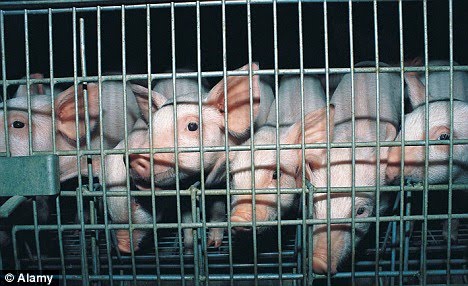
factory farm pigs photo
http://www.treehugger.com/files/2010/12/80-percent-u-s-antibiotics-given-to-farm-animals.php

SUMMARY
80% of all antibiotics purchased in the US go to farm animals. About 10 years ago, concerned scientists calculated that 70% of antibiotics went to farm animals. The FDA released an annual amount of antimicrobial drugs sold and used for food animals. The estimated total in 2009 was 28.8 million pounds. To sum it all up, we are pumping antibiotics into farm animals so they don't get sick in the cramped dark spaces they are locked in. As antibiotic resistance becomes a greater problem, people think that human medication is the answer because it uses equal volumes of antibiotics.

REFLECTION
I think it is crazy that we are giving so many antibiotics to farm animals. I find it inconvenient because we could put the animals outside to keep them healthy, and save so much money for not using antibiotics for animals. Even though factory farms are quicker and easier than family farms, i feel that the animals health is more important than anything. Like we learned in class, if we are going to be eating the animals, it is like we are consuming the antibiotics also. if this does not change, which i don't think it will, i think that using human medication is a smart idea. all that matters to me is that the animals are healthy before we eat them.

QUESTIONS
1) Do you find it shocking that 80% of purchased antibiotics are used for farm animals?
2) Do you think antibiotic resistance is a big problem?
3) Do you think using human medication is a smart idea?
4) Would you rather eat animals that were given antibiotics or not? why?